

10 Best TT Rackets for Beginners and Pros
Choosing among the 10 best table tennis rackets can feel harder than learning a new serve. A well-matched Tt Racket should suit your current skill, playing style, and comfort—not just promise impressive speed. Beginners often benefit from controlled shots, a steady grip, and forgiving rubbers that make rallies easier to manage. Competitive players may prefer sharper response, spin potential, or a blade that supports precise placement. There is no single perfect choice.
This guide compares options for beginners and experienced players using practical features such as weight, handle shape, blade feel, and rubber characteristics. These details affect how a racket behaves during blocks, loops, and quick exchanges at the table. Small differences matter. A heavier setup may feel stable to one player but tiring to another, while fast rubbers can reward practiced technique and expose inconsistent strokes. Specifications are useful, but they cannot tell the whole story. Personal feel still counts.
The recommendations are intended to help narrow the field, not replace trying a racket when that is possible. Skill level also changes over time, so today’s comfortable choice may not fit tomorrow’s ambitions. That part is easy to overlook. Consider your budget, playing frequency, and the kind of feedback you want from each shot before choosing. A racket should support better practice, not simply look professional. Even careful comparisons leave room for preference, and that is worth remembering.
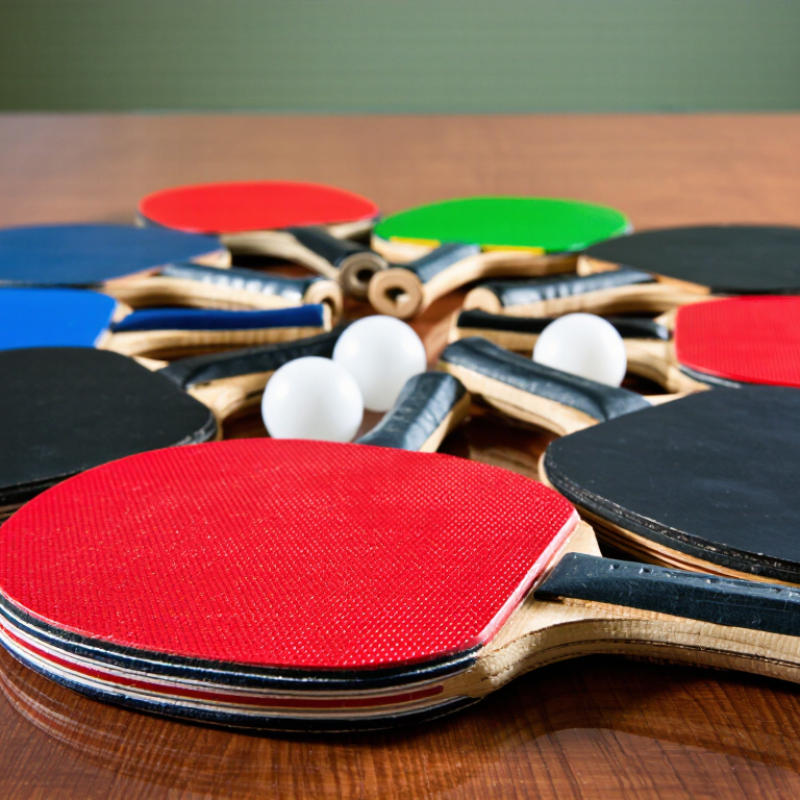
How Table Tennis Rackets Are Built and Rated
A table tennis racket combines a blade, adhesive, and two rubber coverings. Its construction is regulated, but its feel is personal. The International Table Tennis Federation’s Handbook, Technical Laws of Table Tennis, section 2.4, requires at least 85% of the blade’s thickness to be natural wood. The rules also cap total covering thickness: 4.0 mm for sandwich rubber with sponge and 2.0 mm for ordinary pimpled rubber without sponge. Small details matter.
Those limits describe legality, not playing style. A stiff blade may feel direct on a fast drive, while a softer sponge can feel more forgiving on a gentle touch. Yet speed, spin, and control ratings do not follow one universal scale. They are useful comparisons, not laboratory guarantees. Feel matters.
When comparing rackets, note the blade layers, rubber type, sponge thickness, and stated weight. Then test short pushes, blocks, and counterhits if possible. A rating that suits a compact beginner stroke may not suit a player who swings hard. I still find rating language imperfect: it often reduces a whole racket to three numbers. The ITTF rules verify equipment specifications, but they do not certify those commercial performance scores. Try the racket with the same ball you normally use. Small differences show up quickly.
What to Consider When Choosing a Table Tennis Racket
Choosing a table tennis racket starts with matching its feel to your current technique. A lighter racket can be easier to maneuver during quick exchanges, while a heavier one may feel steadier on powerful shots. Beginners often benefit from moderate speed and good control rather than the fastest setup available. Rubber grip also matters: tackier surfaces can help create spin, but they may feel unfamiliar at first. Hold the racket if possible. Notice whether the handle feels secure when your palm gets warm.
Experienced players should consider blade flexibility, rubber thickness, and playing style. An offensive player may prefer a quicker response, while a defensive player might value placement and touch. Check that the racket suits both sides of your game, especially if you use different strokes for forehand and backhand. More speed does not automatically mean better performance. It is easy to blame equipment when timing or footwork needs work; I would reconsider that before buying another racket.
Tips: Ask to test a similar setup at a club. Try short pushes, blocks, and topspin drives, not just hard smashes. Keep the first session simple. A racket that feels slightly slow can still help you place the ball reliably. Give yourself several practices before judging it, and note what feels awkward.
10 Best Table Tennis Racket Setups for Beginners and Pros: What to Consider
These are equipment profiles rather than specific products. Weights are approximate for a complete racket and vary with blade, rubber, and handle. Speed, spin, and control ratings are comparative guidance, not standardized measurements.
| Setup | Best For | Typical Blade | Approx. Weight | Rubber Thickness | Handle | Speed / Spin / Control | Main Consideration |
|---|---|---|---|---|---|---|---|
| 1. Lightweight Allround | New players learning basic strokes | 5-ply all-wood | 155–175 g | 1.5–1.8 mm | Flared or straight | Low / Medium / High | Easy to control, but offers less power for finishing shots. |
| 2. Balanced Allround | Beginners moving into regular club play | 5-ply all-wood | 165–185 g | 1.8–2.0 mm | Flared | Medium / Medium / High | A versatile choice for learning both offensive and defensive strokes. |
| 3. Control-Oriented Allround | Players prioritizing placement and consistency | 5-ply all-wood, flexible feel | 165–185 g | 1.5–1.8 mm | Straight or flared | Low–Medium / Medium / Very High | Helps keep the ball on the table; attacking shots require more effort. |
| 4. Beginner Offensive | Developing players learning topspin attacks | 5-ply all-wood, medium feel | 170–190 g | 1.8–2.0 mm | Flared | Medium / Medium–High / Medium–High | Provides room to develop attacking technique without an especially fast setup. |
| 5. Spin-Focused Offensive | Loopers who create spin with full strokes | 5-ply all-wood, flexible to medium feel | 175–195 g | 2.0 mm or max | Flared | Medium–High / High / Medium | Grippy, thicker rubber can support spin but may feel harder to control at first. |
| 6. Fast Offensive | Experienced attackers seeking direct pace | 5-ply wood or 7-ply wood | 175–200 g | 2.0 mm or max | Flared | High / Medium–High / Medium–Low | Rewards confident timing; short pushes and blocks can be more demanding. |
| 7. Carbon-Composite Offensive | Advanced players who prefer a stiff, fast feel | Wood layers with composite reinforcement | 175–205 g | 2.0 mm or max | Flared or anatomic | High / Medium–High / Medium–Low | Often gives a larger effective hitting area, but may offer less soft-touch feedback. |
| 8. Two-Sided Looping | Players attacking with forehand and backhand | 5-ply or 7-ply wood | 180–205 g | 2.0 mm or max on both sides | Flared | Medium–High / High / Medium | Two thicker rubbers can make the racket heavier; consider balance and swing comfort. |
| 9. Defensive Chopper | Defenders using chops, blocks, and occasional attacks | Defensive all-wood blade, often larger in shape | 165–195 g | Thin to medium on the chopping side; varied on the other | Flared or straight | Low / Variable / High | Rubber choice strongly affects reversal, spin, and attacking options. |
| 10. Custom Allround-to-Offensive | Club players fine-tuning a familiar setup | 5-ply or 7-ply wood | 170–200 g | 1.8–2.0 mm, matched to each side | Choose for a secure, comfortable grip | Medium / Medium–High / Medium–High | Matching blade speed and rubber feel matters more than choosing the thickest rubber. |
Best Table Tennis Rackets for Beginners
Choosing a first table tennis racket is less about maximum speed and more about keeping the ball on the table. A racket with a moderate pace and grippy, smooth rubber gives beginners room to practise placement and basic spin. Very fast equipment can make small timing errors harder to manage. Start with control.
Hold the racket before buying, if possible. The handle should sit securely in your palm without forcing your fingers into an awkward position. A comfortable weight matters too; after several short games, a heavy racket may tire your wrist. Check that the rubber covers the blade evenly and has no peeling edges. These details are easy to miss.
Beginners often focus on spin ratings before they can return ten steady balls. I would put consistency first, though that advice is not perfect: a racket that feels controlled to one player may feel dull to another. Ask a coach or experienced player to watch a few rallies, then try a simple all-round setup. Notice whether the ball lands where you expect. Keep the first choice practical, not precious; your technique will change, and your preferences may change with it.
Best Table Tennis Rackets for Intermediate and Advanced Players
10 Best TT Rackets for Beginners and Pros
Best Table Tennis Rackets for Intermediate and Advanced Players
For intermediate and advanced players, racket choice should match the strokes they actually use. A fast setup can help aggressive loops, but it may make short serves and blocks harder to control. Consider blade speed, rubber grip, and total weight together. A racket that feels lively during warm-ups can feel tiring after several close-to-the-table rallies.
The International Table Tennis Federation’s equipment regulations specify that at least 85% of a blade’s thickness must be natural wood. That standard does not tell you which racket will suit your game, but it offers a useful baseline when comparing blade construction. Test your current setup against a simple question: can you place a controlled block near the end line without changing your grip? There is no perfect formula, and faster equipment is not always better.
Tips: Borrow or test a racket before buying, if possible. Try five minutes of serves, blocks, and topspin rallies. Notice whether the handle sits comfortably and whether your forearm feels strained. Keep notes; memory can be misleading.
Table Tennis Racket Guide: Rubber Thickness Limits
A useful specification to check when choosing a racket for any playing level is the maximum permitted thickness of its rubber covering.
ITTF rules allow a maximum total thickness of 2 mm for ordinary pimpled rubber without sponge and 4 mm for sandwich rubber with sponge. These are equipment limits, not recommendations for a particular playing level.
How to Compare and Care for Your Racket
When comparing rackets, look beyond speed labels. Test how the handle sits in your palm, whether the racket feels balanced, and how easily you can control a short push. A heavier setup may feel powerful but tire a new player’s wrist. Feel matters. ITTF Laws of Table Tennis, Rule 2.4, requires at least 85% of a racket blade’s thickness to be natural wood. It also limits sandwich-rubber covering to 4 mm and ordinary pimpled rubber to 2 mm. These figures help you check equipment specifications, but they do not tell you which racket suits your stroke.
Care affects consistency. Wipe the rubber with a clean, slightly damp cloth after play, then let it air-dry before covering it. Keep the racket away from hot car interiors, direct sunlight, and gritty surfaces. Dust can reduce grip, while careless storage may warp the blade. Don’t soak it. Inspect the edges and rubber regularly; replace worn covering when the ball starts slipping during gentle topspin practice. One caveat: a worn surface can be hard to judge by sight alone.
Tips: Compare rackets using the same simple drill: ten controlled pushes, then ten forehand drives. Note comfort and ball placement, not just speed. Store the racket flat in a protective case. If your notes are inconsistent, repeat the test another day; fatigue can fool you.

