What is an Interlocking Nail Implant and How Does It Work?
The Interlocking nail implant is a significant advancement in orthopedic surgery, used for the treatment of long bone fractures. According to the latest data from the World Health Organization, fractures account for a substantial portion of global health issues. In particular, interlocking nails have gained attention for their ability to provide stable fixation.
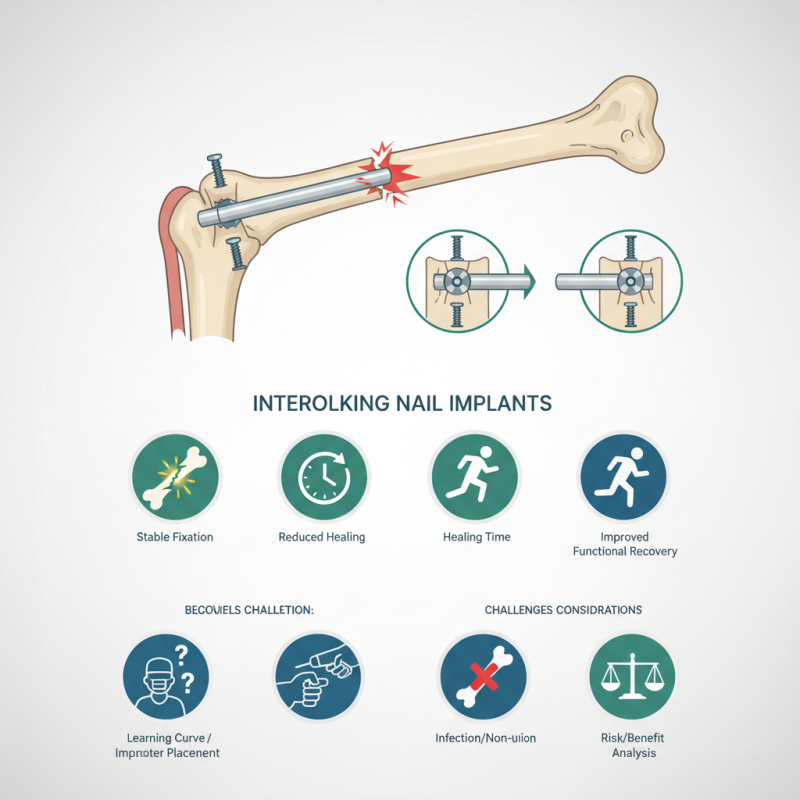
This innovative device consists of a metal rod inserted into the medullary canal of a bone. It features locking screws that enhance stability. Studies indicate that this method reduces healing time and improves functional recovery for patients. However, the learning curve for surgeons can present challenges. Some studies suggest that improper placement may lead to complications.
While the Interlocking nail implant offers many benefits, concerns remain. For instance, potential infection or non-union can occur. Additionally, healthcare providers must weigh the risks and benefits carefully. Further research is needed to perfect its application. The evolution of the Interlocking nail implant, despite its promise, reflects the ongoing need for improvement in orthopedic treatments.
Definition and Overview of Interlocking Nail Implants
Interlocking nail implants are medical devices used in orthopedic surgery. They are primarily designed to fix fractures in long bones like the femur or tibia. The implant consists of a metal rod with locking screws. These screws hold the bone fragments securely together during healing.
The interlocking nail is inserted into the medullary cavity of the bone. Once placed, screws are used to lock the nail to the bone, providing stability. This method allows for early weight-bearing, which promotes quicker recovery. However, there can be complications, such as infection or non-union of bone.
Surgeons must carefully consider the patient's condition. Not all fractures are suitable for this treatment. The sizing of the nail is crucial, as an improper fit can lead to issues. Healing times vary, and patients might experience discomfort. Rehabilitation is essential for recovery but can also be challenging.
What is an Interlocking Nail Implant and How Does It Work?
| Dimension | Description |
| Definition | An interlocking nail implant is a type of intramedullary nail used in orthopedic surgery to stabilize fractures of long bones. |
| Indications | Commonly used for treating femoral and tibial fractures, particularly in complex or unstable cases. |
| Material | Typically made from stainless steel or titanium for strength and biocompatibility. |
| Mechanism | The implant is inserted into the medullary canal of the bone and secured with screws at both ends to provide stability. |
| Advantages | Promotes early mobilization, minimizes soft tissue disruption, and supports bone healing. |
| Risks | Possible infection, nonunion or malunion, and hardware failure require consideration during the procedure. |
| Post-operative care | Includes pain management, physical therapy, and regular follow-up to monitor healing. |
The Design and Composition of Interlocking Nail Implants
Interlocking nail implants are specialized medical devices used primarily in orthopedic surgery. Their design is pivotal for ensuring stability in fractured bones. Typically, they are made from biocompatible materials like titanium or stainless steel. These materials offer a combination of strength and reduced risk of infection, vital for post-surgical recovery.
The structure of an interlocking nail is unique. It includes a central rod with multiple holes for screws. This feature allows surgeons to secure the implant directly to the fractured bone. Reports indicate that the success rate for interlocking nails can reach over 90% in complex fractures. However, surgical precision is crucial. Any misalignment may lead to complications or prolonged recovery time.
Despite their effectiveness, interlocking nails are not without challenges. Some patients experience discomfort or complications from the surgical procedure. It is essential for healthcare providers to discuss these risks thoroughly. Data shows that about 15% of patients may have issues post-surgery. This statistic highlights the need for continuous improvement in technique and patient care.
Mechanism of Action: How Interlocking Nails Support Bone Healing
Interlocking nail implants are innovative devices used in orthopedic surgery. Their primary purpose is to stabilize fractured bones. These implants are inserted into the medullary cavity of bones. They are designed to be locked in place to minimize movement at the fracture site.
The mechanism of action is fascinating. When an interlocking nail is inserted, it provides structural support. The locking mechanism prevents rotational and axial movement. This stability promotes proper alignment and healing. The design allows for weight-bearing activities, which is essential for bone regeneration. As the bone heals, the implant gradually supports the load, adapting to the patient’s activity levels.
However, there are challenges. Not every patient responds well to interlocking nails. Some may experience discomfort or complications. This can lead to a slower healing process. Feedback from patients often highlights the need for adjustments in the surgical technique. Reflecting on these experiences can help improve future procedures and patient care in bone healing.
Indications and Applications for Using Interlocking Nail Implants
Interlocking nail implants are increasingly used in orthopedic surgery. They are primarily indicated for the treatment of long bone fractures. This includes fractures of the femur, tibia, and humerus. Interlocking nails offer stability and support during the healing process. They are particularly beneficial for patients with complex fractures or those requiring internal fixation.
Another application involves treating osteogenesis imperfecta. This condition leads to brittle bones, making standard treatments challenging. Interlocking nails can provide the necessary reinforcement. They also facilitate easier mobility and greater function in daily life.
Tips for recovery include maintaining a proper diet rich in calcium. This supports bone health and aids healing. Regular physical therapy is crucial, too. Gradual movement can help regain strength without putting undue stress on the implant. It’s important to listen to your body. Any unusual pain should be reported to your healthcare provider. Adjusting expectations and being aware of the healing timeline is essential for a successful recovery.
Interlocking Nail Implant Applications and Usage Statistics
Potential Risks and Complications Associated with Interlocking Nails
Interlocking nail implants are widely used for treating long bone fractures. While they are effective, potential risks and complications must be acknowledged. According to a study published in the Journal of Orthopaedic Trauma, about 15% of patients may experience complications after the procedure.
Infection is one of the main concerns. Surgical site infections can develop in 5-10% of cases. These infections may delay recovery and require additional surgeries. Nonunion, where the fractured bone does not heal properly, occurs in approximately 5-15% of patients. This can lead to prolonged pain and the need for further intervention.
Moreover, complications such as knee stiffness or malalignment can occur. A report from the American Academy of Orthopaedic Surgeons indicates that proper alignment during the procedure reduces these risks. However, even the most skilled surgeons cannot eliminate all potential issues. Patients should discuss these risks thoroughly with their healthcare providers before deciding on interlocking nail implants.