China Top 10 Custom O Ring Kit Manufacturers?
Choosing among China’s top 10 Custom O-Ring Kit Manufacturers requires more than comparing catalog prices. A reliable Custom O-Ring Kit Manufacturer should understand sealing conditions, not merely supply assorted rubber rings. Material compatibility, temperature range, pressure, chemical exposure, and groove dimensions all influence performance. Small details matter. A two-millimeter mismatch can cause leakage.
Dr. Robert Flitney, a recognized sealing specialist and author of Seals and Sealing Handbook, offers a useful principle: “Seal selection must match the application, material, and working conditions.” This guidance shapes our evaluation. We examine elastomer options, dimensional control, compression-set testing, batch traceability, packaging quality, and engineering support. We also consider whether manufacturers can produce metric, imperial, bonded, encapsulated, or application-specific kits. A strong supplier should explain its recommendations clearly. It should also provide samples before full production.
However, no ranking is flawless. Manufacturing capabilities change, and published information may remain incomplete. A factory with modern equipment may still offer inconsistent communication. Another supplier may appear less prominent but deliver better technical support. That matters in aerospace, hydraulics, medical equipment, automotive systems, and industrial maintenance. Our overview therefore focuses on practical evidence rather than popularity alone. We compare customization depth, quality systems, delivery responsiveness, and documented industry experience. Buyers should verify certifications, inspect sample kits, and confirm material data before placing large orders. The best choice is rarely the cheapest. It is the manufacturer that makes the correct seal easier to specify, test, and replace.
Custom O-Ring Kits: Definitions, Materials, and ISO 3601 Sizing Standards
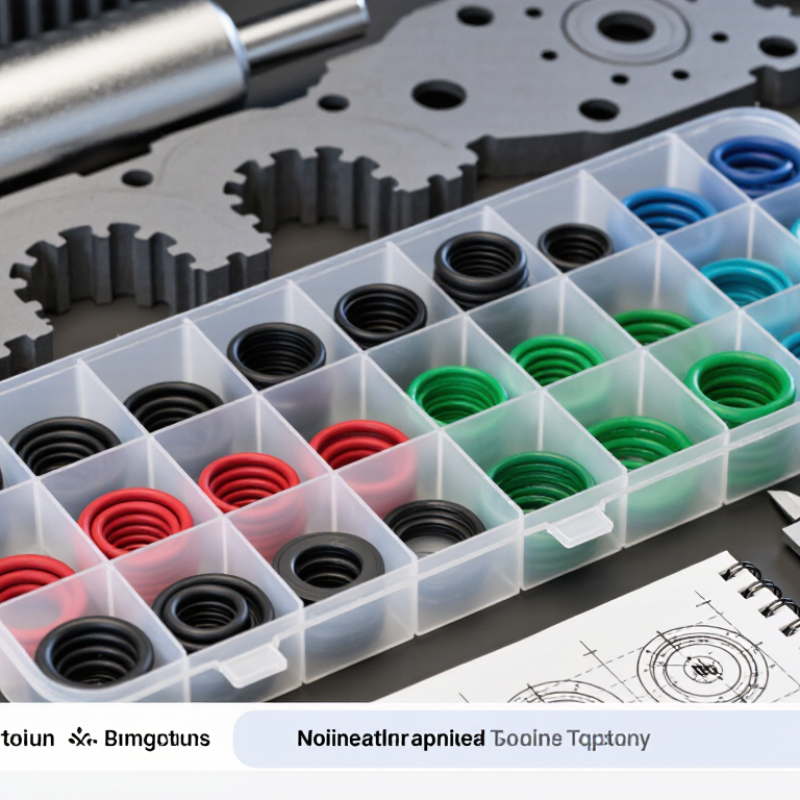
A custom O-ring kit is a prepared set of sealing rings selected for one machine, repair program, or operating environment. It may include several diameters, cross-sections, materials, backup rings, and installation tools. The goal is practical: reduce search time and prevent incompatible replacements during maintenance.
Material selection depends on temperature, fluid exposure, pressure, and movement. NBR suits many oil and pneumatic applications, while EPDM handles water, steam, and selected chemicals. FKM generally performs well at higher temperatures and with many fuels. Silicone remains flexible in cold conditions, but it may resist abrasion poorly. Material choice is not automatic. A clean-looking seal can still swell, crack, or lose elasticity after contact with the wrong fluid.
ISO 3601 provides dimensional designations, tolerances, and inspection guidance for O-rings used in industrial and aerospace applications. Size verification should cover both inside diameter and cross-section, not diameter alone. Groove width, depth, compression, and stretch also affect sealing performance. Custom kit manufacturers should check these details against drawings or measured samples. Calipers help, but damaged rings can produce misleading readings. Batch traceability, hardness testing, visual inspection, and dimensional reports add useful reliability. Even experienced maintenance teams sometimes overlook storage conditions, especially heat, ozone, and sunlight. That weakness deserves attention.
China’s Top 10 Custom O-Ring Kit Manufacturers by Capability and Market Focus
China’s top ten custom O-ring kit manufacturers are better judged by capability and market focus than by factory size. A perfect ranking is impossible because public data is uneven. Buyers should verify compound certificates, mold control, inspection records, and sample consistency before placing an order.
One manufacturer may specialize in silicone and EPDM kits for food-processing equipment. Another may focus on FKM and HNBR seals for high-temperature machinery. Precision molders often serve hydraulic and pneumatic equipment makers, using automated inspection for diameter and flash control. Cleanroom-oriented producers target medical and laboratory applications, while high-volume factories supply automotive maintenance kits. Some workshops handle low-volume prototypes, custom colors, and laser-marked packaging. That flexibility matters.
Other strong suppliers concentrate on oil-resistant compounds for pumps and compressors. Several serve electronics manufacturers with miniature O-rings and tight dimensional tolerances. Export-focused factories usually offer multilingual documentation, batch traceability, and mixed-size kits. A few focus on repair distributors, providing labeled compartments and fast replenishment. These ten market positions reveal meaningful differences. Capability is not always consistent across every material. A factory may excel at molding but lack reliable packaging control. Another may provide excellent certificates yet respond slowly to engineering changes. Requesting test samples, compression-set data, hardness readings, and a pilot batch remains the safest evaluation method. Practical experience often exposes weaknesses that catalog pages hide.
Quality Control Metrics: Tolerances, Testing Methods, and Certification Requirements
Quality Control Metrics: Tolerances, Testing Methods, and Certification Requirements
When evaluating China’s top custom O-ring kit manufacturers, start with dimensional control. ISO 3601-1 defines standardized inside diameter and cross-section tolerances for O-rings. Grade A requirements are tighter than Grade B requirements, making them more suitable for precision sealing. Measure samples with calibrated optical equipment, not only handheld calipers. Record at least three readings per dimension. Small distortions can change sealing pressure.
Material testing must match the service environment. ASTM D1414 covers O-ring dimensional and compression testing, while ASTM D412 evaluates tensile strength and elongation. ASTM D395 measures compression set after controlled heat exposure. A practical audit should include temperature aging, fluid immersion, hardness checks, and leak testing. Test reports need batch numbers, specimen sizes, temperatures, exposure times, and acceptance limits. Vague reports are warning signs.
Certification also requires careful verification. ISO 9001 supports process control, but it does not prove that every compound performs correctly. Request current certificates, laboratory accreditation evidence, calibration records, and traceability documents. For aerospace, automotive, food-contact, or medical applications, additional sector requirements may apply. One useful metric is the supplier’s nonconformance rate across recent batches. However, a low reported rate may reflect weak reporting rather than excellent quality. That is worth questioning. A sample kit can pass inspection while production consistency still fails, so repeat audits and retained samples remain necessary.