Top Mining Machinery Spare Part Suppliers Worldwide
Choosing among the top mining machinery spare part suppliers worldwide requires more than comparing prices. A reliable supplier supports uptime, equipment safety, and predictable maintenance planning. This guide examines companies serving open-pit and underground operations. It considers product range, manufacturing experience, quality controls, and technical support. The term Mining Machinery Spare Part covers critical items, including crusher liners, conveyor rollers, hydraulic pumps, filters, and excavator undercarriage components. Each part faces different loads, temperatures, dust levels, and replacement intervals. Real-world performance matters. So does traceability. Suppliers should provide material specifications, inspection records, and clear warranty terms. Their ability to match serial numbers and machine models can prevent costly ordering errors. Lead times also deserve attention, especially when a failed bearing can stop an entire processing line.
The strongest suppliers usually combine engineering knowledge with responsive communication. They may offer OEM parts, compatible alternatives, or custom solutions, but each option needs careful verification. Independent testing, documented production standards, and consistent packaging can reveal a supplier’s reliability. However, no ranking remains perfect for every mine. A supplier with excellent casting quality may have limited regional stock. Another may offer fast delivery but weaker application guidance. Buyers should compare failure history, total ownership cost, and after-sales response, not only catalog breadth. Ask for samples when practical. Check dimensions, hardness, seals, and fit before large purchases. Conversations with maintenance supervisors can add evidence that brochures cannot provide. This overview supports informed sourcing through balanced, practical evaluation. It does not replace site inspections or qualified engineering judgment. Mining conditions vary. Careful decisions still require experience.
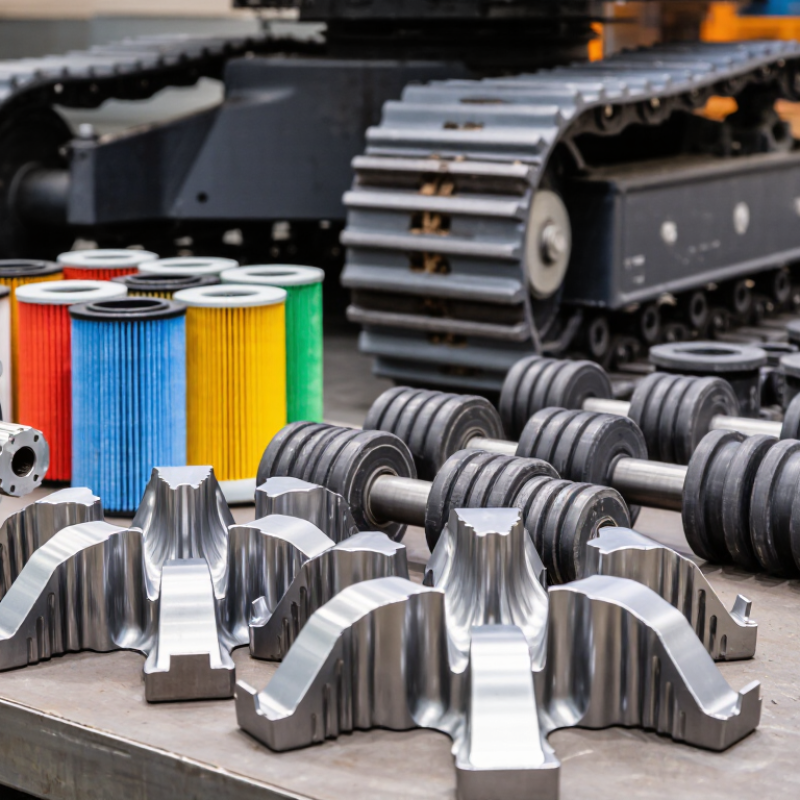
Mining Machinery Spare Parts: Types, Functions, and Industry Applications
Mining machinery spare parts keep crushing, screening, conveying, and drilling systems productive. Wear parts include crusher liners, jaw plates, screen panels, buckets, teeth, and conveyor idlers. Seals, bearings, couplings, and hydraulic hoses support movement and pressure control. Each part has a specific job. A liner protects the crushing chamber from abrasive rock. An idler guides the belt and reduces friction. During field inspections, I check wear patterns, heat marks, cracks, and unusual noise before recommending replacement.
Tips: Match each spare part with the machine model, duty cycle, material hardness, and operating temperature. Measure mounting holes and shaft dimensions. Keep clear maintenance records. Store seals away from sunlight and dust. Replace damaged fasteners instead of forcing them into place. Small errors become costly downtime. A checklist helps, but it cannot replace skilled inspection.
Applications vary across mining operations. Hard-rock sites need impact-resistant liners and durable crusher components. Wet processing areas require corrosion-aware materials and protected bearings. Underground equipment often depends on compact hydraulic parts, reliable filters, and strong cutting tools. Quality should be checked through material certificates, dimensional inspections, and controlled testing. I have seen apparently identical parts perform differently under changing feed conditions. That reminder matters. Supplier claims need practical evidence, and maintenance plans should remain flexible.
Key Criteria for Evaluating Global Spare Parts Suppliers
Choosing global mining machinery spare part suppliers requires more than comparing prices. Start with proven field experience in harsh environments, including dust, vibration, heat, and heavy shock. A reliable supplier should explain material grades, machining tolerances, heat treatment, and compatibility with your equipment. Ask for inspection records, dimensional reports, and traceable batch information.
Delivery performance matters just as much. Check stock visibility, realistic lead times, export documentation, packaging quality, and replacement procedures. Parts should arrive protected from moisture, with clear labels and matching specifications. Speak with technical staff, not only sales representatives. Their answers often reveal practical expertise. Still, no supplier is perfect. A certificate does not guarantee long service life, and an attractive price may hide weak quality control. Independent testing or a small trial order can reduce that risk.
Tips: Compare three suppliers using the same checklist. Request recent customer references from similar mining conditions. Measure critical parts on arrival, and record failures with photos and operating hours. Review communication speed, because delayed technical answers can become costly downtime. Keep an approved supplier list, but reassess it after every major delivery. Sometimes, we trust familiar vendors too quickly. That habit deserves review.
Top Mining Machinery Spare Part Suppliers Worldwide
Key Criteria for Evaluating Global Spare Parts Suppliers
This weighted evaluation model highlights the practical criteria procurement teams commonly use when comparing global mining machinery spare parts suppliers. Delivery reliability, parts availability, and technical compatibility receive the highest weights because they directly influence equipment uptime and maintenance efficiency.
Leading Worldwide Suppliers and Their Product Specialties
Top Mining Machinery Spare Part Suppliers Worldwide
Leading suppliers differ by product specialty, not only by production volume. North American manufacturers often focus on hydraulic pumps, final drives, and undercarriage assemblies for large surface fleets. European suppliers commonly emphasize filtration, braking systems, precision bearings, and wear-resistant steels. Asia-Pacific specialists remain strong in crusher liners, conveyor rollers, castings, and replacement engine components. These patterns reflect regional engineering capabilities, not a universal ranking.
Demand is substantial. The International Energy Agency reported that clean-energy mineral demand could double by 2030 under current policy settings. More extraction means more pressure on loaders, haul trucks, crushers, and drilling rigs. A failed seal can stop a shift. A worn liner can reduce throughput. The World Mining Data report recorded global copper mine production above 22 million tonnes in 2022, showing the scale of equipment use behind modern supply chains.
Reliable suppliers provide more than fast shipping. They should show material certificates, dimensional inspection records, batch traceability, and tested compatibility. ISO 9001 systems help, but certification alone proves little. Field performance matters more. In my experience, suppliers with strong application engineers often outperform cheaper catalog vendors. However, supplier comparisons remain imperfect; published data rarely separates genuine replacement parts from low-quality copies. Buyers should check wear rates, mean time between failures, warranty terms, and emergency stock near the mine site. Small details decide uptime.
Quality Standards, Compatibility, and Supply Chain Considerations
Mining machinery spare parts face abrasive dust, heavy loads, vibration, and sudden temperature changes. A reliable supplier should define quality with measurable controls, not attractive claims. Look for documented inspections, material certificates, heat-treatment records, and batch traceability. Critical dimensions need verification with calibrated gauges before packing. Photos help, but inspection data carries more weight. Ask how defects are recorded and corrected. That reveals process maturity.
Compatibility goes beyond matching a part number. Confirm dimensions, mounting holes, shaft tolerances, sealing surfaces, and material grade. The replacement must suit the machine’s load, speed, temperature, and working conditions. For crusher liners, wear patterns matter as much as initial fit. For hydraulic components, pressure ratings and seal materials deserve closer review. A sample part, drawing review, or controlled trial can prevent expensive downtime. I have seen apparently correct parts fail because one hardness value was overlooked. Small details matter.
Supply chain reliability depends on more than warehouse claims. Request realistic lead times, stock locations, production capacity, and packaging standards. Strong suppliers provide order updates and retain traceable shipping documents. Moisture-resistant wrapping, protected machined surfaces, and clear labels reduce transit damage. Ask about backup production routes when a casting or seal is delayed. No supplier is perfect. A transparent explanation of limitations is often more trustworthy than confident promises.