

Why Use Outdoor Advertising Flags for Your Business?
A passerby has only a moment to notice your business. A well-placed flag can make that moment count. Outdoor Advertising Flags add height, movement, and color to storefronts, event entrances, and sidewalk displays. A feather flag beside a café door, for example, can point visitors toward a seasonal menu or a less visible entrance.
The principle aligns with advertising expert David Ogilvy’s advice: “The more informative your advertising, the more persuasive it will be.” A flag works best when its message is brief and readable from a distance. One clear offer or direction usually beats a crowded list of services. Keep key words large, use strong contrast, and check that the design remains legible against its surroundings.
Small details matter. Fabric can ripple in a light breeze, but harsh weather may strain a pole or fade colors over time. Placement also changes what people see: a flag hidden behind parked vehicles will do little. Measure the space, consider foot traffic, and choose a base suited to the surface. Then inspect the display regularly.
Flags are not a guaranteed source of sales. Their impact depends on location, design, upkeep, and the audience passing by. Still, they offer a practical way to make a business easier to spot. Sometimes the message needs another edit. That is worth admitting.
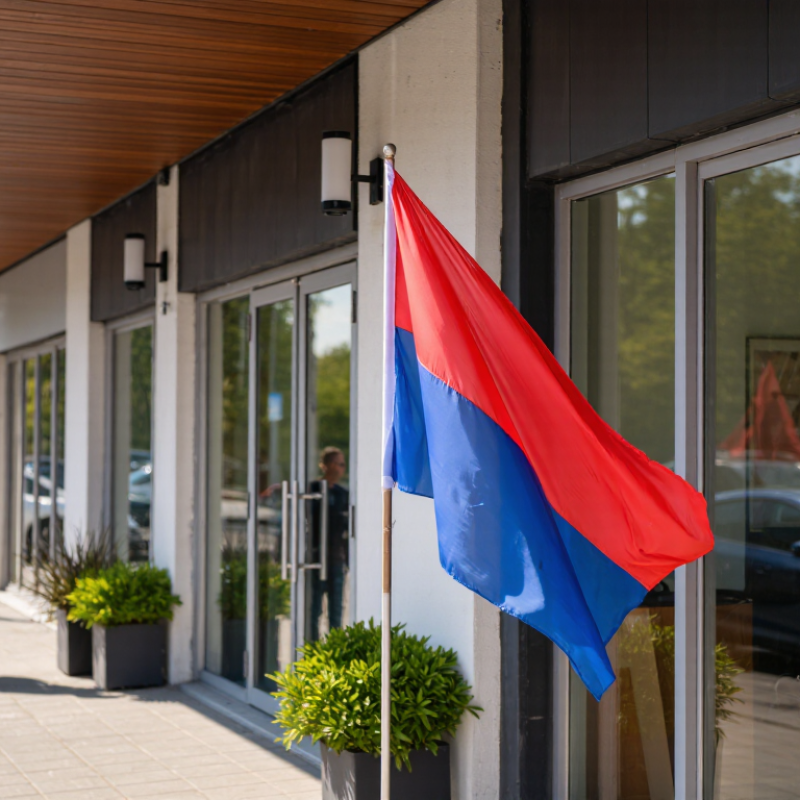
What Outdoor Advertising Flags Are and How They Capture Attention
Outdoor advertising flags are portable fabric signs fixed to poles, stands, or building walls. They use tall, vertical shapes to present a message above parked cars and pedestrian traffic. Feather flags move with the wind, while teardrop flags keep a curved, readable surface. Their motion creates a visual interruption. That matters near entrances, roads, markets, and event paths.
The Out of Home Advertising Association of America reported that outdoor advertising revenue reached about $9.1 billion in 2023. Its research also indicates that out-of-home media reaches most American adults each week. These figures support flags as practical attention tools, not automatic sales machines. A flag can show a clear offer within two seconds. Bright contrast, large lettering, and generous spacing improve reading distance. However, crowded designs still fail. I have seen attractive flags become unreadable beside busy storefronts. The lesson is uncomfortable but useful: visibility does not guarantee understanding.
Tips: Use five to seven words for the main message. Place the highest-value information near eye level. Choose colors that contrast with the surroundings, not merely your logo. Test the flag from the customer’s actual walking or driving direction. The Outdoor Advertising Association of America also advises evaluating placement, frequency, and creative clarity together. Record foot traffic before and after installation. Weather can change performance, too. Wind, glare, and rain deserve attention. A sturdy base and regular cleaning protect credibility, although maintenance is often overlooked.
Why Use Outdoor Advertising Flags for Your Business? - What Outdoor Advertising Flags Are and How They Capture Attention
| Dimension | What It Means | How It Can Capture Attention | Practical Considerations |
|---|---|---|---|
| Definition | A portable outdoor sign made from printed fabric attached to a pole and a base or ground stake. | Its height and movement make it noticeable among stationary signs and storefront details. | Choose a format and base suited to the display location and local conditions. |
| Common shapes | Feather, teardrop, and rectangular styles are commonly used. | A distinctive outline can help the display stand out and make the message easier to spot from a distance. | Check the printable area and layout template for the selected flag shape before designing artwork. |
| Movement | Fabric may flutter or rotate when exposed to a breeze, depending on the design and mounting system. | Motion can draw the eye toward the display, particularly in locations with other visual activity. | Movement depends on wind and setup; secure the flag according to the manufacturer's instructions. |
| Message design | Artwork commonly features a short headline, a simple visual, and a clear call to action. | Brief, high-contrast messaging is easier to scan quickly than dense text. | Prioritize one main message and use lettering that remains legible at the expected viewing distance. |
| Placement | Flags may be positioned near entrances, along event routes, or beside temporary promotions where permitted. | Placement near a relevant destination can help direct attention to an entrance, service, or offer. | Keep paths, driveways, sightlines, and accessible routes clear; check property rules and local regulations. |
| Viewing conditions | Visibility depends on factors such as distance, lighting, background, weather, and surrounding signs. | A clear silhouette and contrasting colors can help the flag remain distinguishable from its surroundings. | Review the display from the approach direction and avoid placing it where trees, vehicles, or structures obscure it. |
| Portability | Many systems are designed to be assembled, moved, and stored between uses. | A portable display can be positioned near the audience or activity it is intended to support. | Confirm that the pole, hardware, and base are compatible and follow setup and storage instructions. |
| Weather and upkeep | Outdoor exposure can affect printed fabric and hardware over time. | A clean, upright, well-maintained flag presents a clearer message than damaged or faded signage. | Inspect the flag regularly, clean it according to care instructions, and take it down in conditions beyond its rated use. |
| Best-fit uses | Common applications include storefront visibility, event wayfinding, temporary promotions, and open-house signage. | A flag can provide a visible cue that helps people notice a location or identify an activity. | Match the message, placement, and display duration to the audience and purpose. |
How Flag Size, Placement, and Movement Shape Local Visibility
A flag earns attention through fit, not size alone. A narrow sidewalk may suit a compact flag, while a broad roadside setback can support a taller one. Keep the message brief and readable from the actual viewing distance. The Outdoor Advertising Association of America’s 2023 revenue report recorded $9.1 billion in U.S. out-of-home advertising revenue, showing continued investment in public-facing media. That figure covers many formats, not flags specifically.
Placement determines whether people can notice the flag in time. Put it near a real decision point, such as a shop entrance or driveway, without blocking sightlines. The 2010 Arbitron National In-Car Study reported that 71% of surveyed drivers noticed roadside billboards. Billboards differ from flags, so the result is useful context, not a direct prediction. Check visibility from the pedestrian path and approaching vehicle, at different times of day.
Movement can catch the eye, but too much flutter may make lettering hard to read. Test the flag on a typical windy day, then view it from across the street. Small details matter. A flag that looks clear up close may disappear against trees or storefront signs. I would not assume one placement works all week; weather, parked vehicles, and foot traffic change what people see.
Where Flags Fit in the $9.1 Billion U.S. OOH Market (OAAA, 2023)
Why Use Outdoor Advertising Flags for Your Business?
Where Flags Fit in the $9.1 Billion U.S. OOH Market (OAAA, 2023)
Outdoor advertising flags offer a practical entry point into the $9.1 billion U.S. out-of-home market reported by OAAA in 2023. They do not replace billboards, transit displays, or digital screens. They occupy a different space: close to the customer, often near a storefront, event entrance, or roadside queue. Their movement can attract attention before people reach a location. A flag also communicates presence when a building sign is partly hidden. From field experience, placement usually matters more than size. A poorly positioned flag becomes background noise.
Flags can support short campaigns, seasonal offers, directions, or simple brand recognition. Their flexible format helps businesses test visibility without committing to a large permanent installation. Results deserve careful interpretation, though. Foot traffic may rise for several reasons, and a flag alone cannot prove causation. Weather, local traffic patterns, and nearby construction can change performance. Local rules, safe installation, and clear sightlines should guide every placement.
Tips: Use one strong message. Keep lettering readable from a moving car. Place flags near decision points, not random corners. Check them after wind or rain. Track visits before and after installation, while accepting that measurement will remain imperfect. Test two locations. One may look better, but perform worse.
How to Choose Flag Materials and Styles for Different Business Sites
Outdoor advertising flags work best when their material matches the site. In my field checks, tightly woven polyester keeps colors stable and handles repeated folding. It feels dependable. Nylon is lighter and catches weak wind, but it may flutter too much beside busy roads. For exposed sites, mesh fabric can reduce wind pressure. Its print may look less solid, though. That trade-off is easy to overlook.
Choose a feather or teardrop style where people approach from one direction, such as a café entrance or showroom path. Their curved edges remain visible while visitors move. Use a straight pole flag for wider streets and parking areas. The rectangular face gives room for prices, opening hours, or a short service message. Keep the wording large. Drivers have little time to read. At construction entrances or uneven ground, select a weighted base, ground stake, or water-filled base according to surface conditions. A beautiful flag is useless if it leans after one gust.
Before ordering, measure the viewing distance, pole height, and daily wind exposure. Check stitching, sleeve strength, UV resistance, and washable finishes with the supplier. Ask for a material sample. Screen colors can appear darker on fabric than on a monitor. I once preferred a glossy finish, but glare weakened the message at noon. Matte fabric proved clearer, although it looked less vivid. That choice was not perfect. Inspect the flag weekly for frayed seams, bent poles, and fading, then replace damaged parts early.
Choosing Outdoor Advertising Flags for Different Business Sites
Practical suitability ratings (1 = low, 5 = high) compare common flag materials and styles for typical outdoor settings. Ratings are a selection guide, not results from a measured survey.
For exposed or windy locations, prioritize durable fabric and secure mounting. Feather flags offer visibility along roads and storefronts, while rectangular flags provide a broad display area for entrances and event spaces.
How to Measure Flag Campaign Reach, Response, and Cost-Effectiveness
Outdoor flags can attract attention near entrances, sidewalks, and event queues, but visibility alone does not prove a campaign worked. Measure reach by recording each flag’s location, display hours, and estimated pedestrian or vehicle traffic. For a professional benchmark, use Geopath audience estimates where eligible inventory is available; its measurement approach accounts for factors such as audience movement and viewing conditions. Treat local footfall counts as estimates, not exact people reached. OAAA reported that U.S. out-of-home advertising revenue reached $9.1 billion in 2023, up 11.5% from 2022. That industry growth shows continuing investment, but it does not guarantee results for an individual flag campaign.
Track response with a unique QR code, short URL, or offer code on each flag, then compare scans, visits, calls, or sales by location. Keep the offer and display period consistent where possible. A busy corner may produce more scans simply because more people pass it. That is not the whole story. Calculate cost per response by dividing production, placement, and maintenance costs by attributable actions. Compare that figure with other local channels, and note weather, blocked sightlines, and repeat exposure. Attribution will remain imperfect. Review the data weekly, move underperforming flags, and record what changed; otherwise, a stronger result may be luck, not learning.

